Low Dose Flumazenil IV
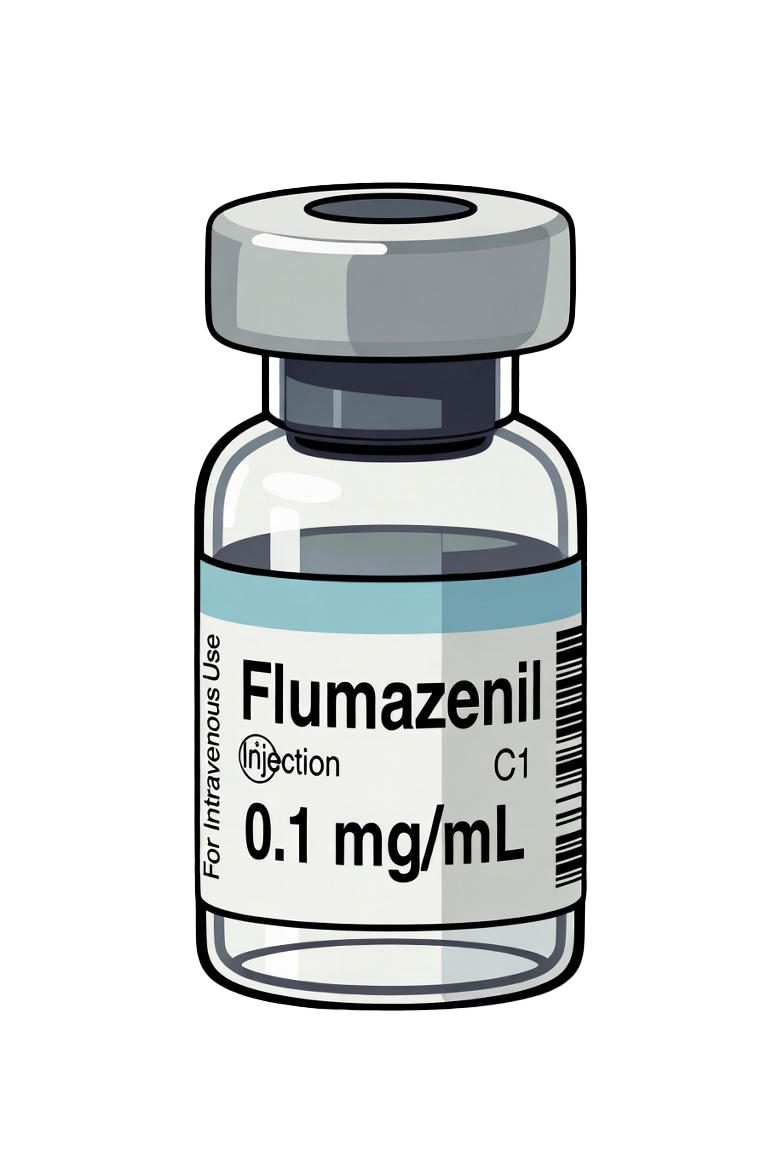
Flumazenil is a prescription medication best known as an antidote for benzodiazepine sedation/overdose. It works by binding to the benzodiazepine site on the GABA-A receptor (i.e., the same receptor complex benzos modulate), and in acute care it can rapidly reverse benzo effects. Separate from emergency use, some clinicians and clinics have explored very low-dose, carefully supervised IV flumazenil protocols in select patients (most commonly discussed in the context of benzodiazepine tolerance/dependence), with the idea that it may help normalize altered GABA-A receptor signaling in certain states. This is not a mainstream, universally accepted “reset,” and dosing/protocols vary—so it should be viewed as a high-complexity medical intervention rather than a supplement-style experiment.
In PFS/PSSD/PAS communities, low-dose flumazenil comes up because many people describe abnormal responses to GABAergic substances, especially alcohol and benzodiazepines—some report they “barely feel” alcohol/benzos or get a strange, dysphoric effect instead of a normal calming response. One hypothesis (borrowed loosely from tolerance states) is that receptor coupling/sensitivity could be altered—similar in feel to how benzo tolerance can blunt effects. Another prominent hypothesis is neurosteroid disruption, especially reduced or dysregulated allopregnanolone, which normally modulates GABA-A receptors and shapes stress response, sleep, and emotional tone. In that framing, the “can’t feel alcohol” phenomenon may reflect a system that’s missing key neurosteroid support or has altered receptor subunit dynamics—not simply “low GABA.”
https://www.sciencedirect.com/science/article/abs/pii/S037687162200254X
Anecdotes:
None associated with PFS/PSSD/PAS
How to Interpret This Page
This page summarizes anecdotal reports and community observations, not medical evidence. “Risk” here refers to how frequently severe or prolonged symptom worsening is reported, not to proven causation or population-wide probability. Individual responses vary widely, and absence of issues in some users does not rule out significant reactions in others.
Reported Risks / Reasons for Caution
Even at low doses, flumazenil is not a casual trial:
It directly targets the GABA-A benzodiazepine binding site, which can provoke adverse reactions in vulnerable people.
In medical literature and clinical use, flumazenil can trigger anxiety/agitation, and in higher-risk contexts (especially with benzodiazepine dependence or mixed-drug exposures) it can precipitate severe withdrawal phenomena.
IV administration adds complexity (monitoring, dosing precision, and safety screening).
For PFS/PSSD/PAS specifically, the key caution is mechanism mismatch uncertainty: if the core issue is predominantly neurosteroid imbalance (e.g., allopregnanolone pathway disruption) or downstream receptor changes not meaningfully “reset” by flumazenil, then the intervention may be ineffective—or destabilizing—despite sounding theoretically relevant. Because of this, many would treat it as a clinician-supervised, last-resort-style experiment rather than a first-line approach.
Evidence Basis
Established pharmacology of flumazenil at the GABA-A benzodiazepine site; limited/variable clinical exploration of low-dose protocols in select contexts; mechanistic theories around GABA-A receptor sensitivity/tolerance and neurosteroid (allopregnanolone) modulation; anecdotal reports (online forums, self-reports). No controlled studies establish low-dose flumazenil as a safe or effective treatment for PFS/PSSD/PAS specifically.