Lamictal (lamotrigine)
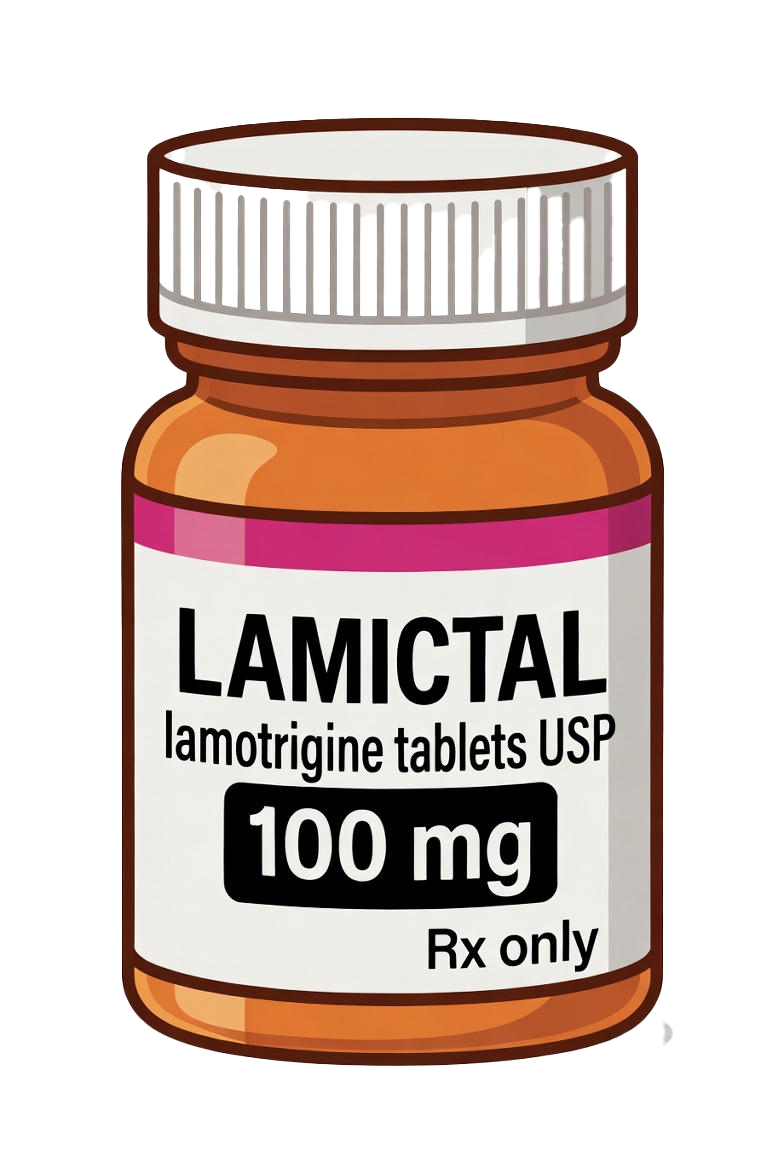
Lamictal (lamotrigine) is a prescription medication most commonly used as a mood stabilizer (especially in bipolar depression) and as an anti-seizure drug. Unlike sedating “downers,” lamotrigine is often described as relatively cognitively “clean” for many users. Its main pharmacology is stabilizing neuronal excitability, largely by inhibiting voltage-gated sodium channels and reducing excessive glutamate release in certain circuits—mechanisms that can translate clinically into smoother mood regulation and less emotional volatility for some people.
In PFS/PSSD/PAS discussions, lamotrigine comes up less as a “root-cause” treatment and more as a symptom-management tool. The theory people cite is not androgenic; it’s more about calming dysregulated neuro-signaling (mood instability, anxiety spikes, irritability, intrusive rumination, sleep disruption) and improving stress tolerance. Because these syndromes can involve a sensitized nervous system, a medication that shifts excitability/glutamate dynamics can feel helpful for some—and destabilizing for others.
Anecdotes (Community Reports):
https://www.reddit.com/r/PSSD/comments/1intc8r/be_careful_about_lamictal/
https://www.reddit.com/r/PSSD/comments/si5s5m/lamictal_probably_cured_my_sexual_dysfunction/
https://www.reddit.com/r/PSSD/comments/1q09b7d/8_month_update_after_getting_pssd_partial_recovery/
How to Interpret This Page
This page summarizes anecdotal reports and community observations, not medical evidence. “Risk” here refers to how frequently severe or prolonged symptom worsening is reported, not to proven causation or population-wide probability. Individual responses vary widely, and absence of issues in some users does not rule out significant reactions in others.
Community Reports: Mixed Outcomes & Variable Risk Signal
Community anecdotes describe mixed, symptom-level outcomes. Some people report improvements in areas like mood stability, anxiety reactivity, irritability, cognitive overwhelm, and overall stress tolerance. Others report little to no meaningful change. A subset report worsening—often framed as feeling emotionally flatter, more fatigued, more “off,” or experiencing increased agitation/anxiety during titration or dose changes. The overall pattern is variable response, with the most common “benefit” framing being supportive symptom relief rather than a broad reversal of the syndrome.
Reported Risks / Reasons for Caution
Lamotrigine is not a casual supplement experiment. It requires slow titration, and its most important safety issue is the risk of serious rash (including rare but life-threatening reactions), which is why clinicians increase it gradually and watch closely for skin symptoms. It can also cause side effects like headache, dizziness, nausea, insomnia or sleep changes, and—less commonly—mood or agitation shifts.
For a PFS/PSSD/PAS audience, a practical risk consideration is that CNS-active medications can be unpredictable in sensitized people, especially early on or during dose changes. Even when lamotrigine helps, it’s generally discussed as a symptom stabilizer, not a direct fix for the underlying biology. Because of the titration and safety profile, most people treat it as a clinician-supervised option where monitoring and careful pacing matter.
Evidence Basis
Established pharmacology and clinical use of lamotrigine (seizure disorders, bipolar disorder); mechanistic literature on sodium-channel modulation and glutamate/excitability effects; anecdotal reports (online forums, self-reports). No controlled studies establish lamotrigine as a treatment for PFS/PSSD/PAS specifically.