Cyproheptadine
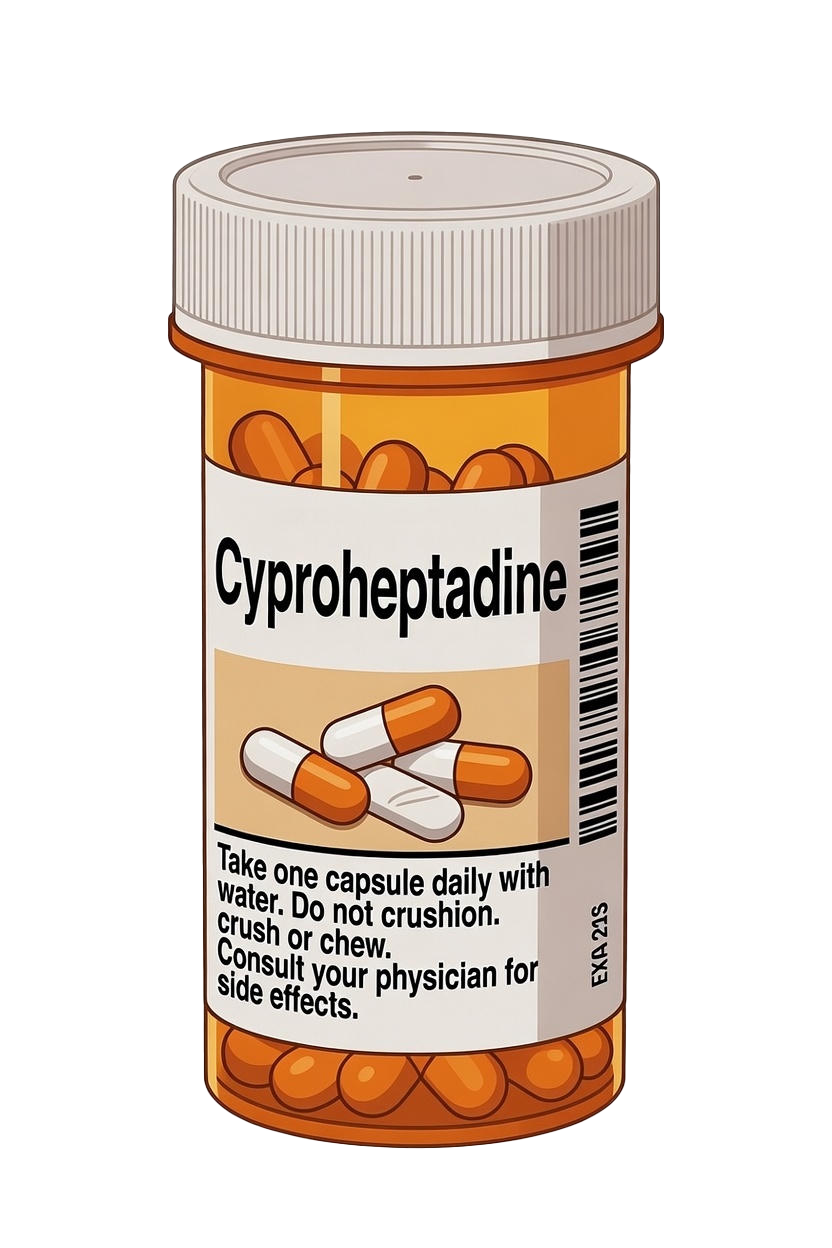
Cyproheptadine (Periactin) is a first-generation antihistamine used for allergy symptoms, and it’s also used off-label for things like appetite stimulation and sometimes as an antidote approach in serotonin toxicity. Pharmacologically, it’s a histamine H1 antagonist and a serotonin antagonist (especially 5-HT2), and it also has anticholinergic and sedatingeffects—so common effects can include sleepiness, dry mouth/constipation, and increased appetite/weight gain (1).
In the PFS/PSSD/PAS context, cyproheptadine is controversial. There are some anecdotes of benefit (likely because it can block certain serotonin receptor signaling and change arousal/sleep patterns), but there are also many reports of flares/crashes—possibly from the strong CNS shift (sedation, anticholinergic load, and broad receptor effects) (2). Moderate risk—not commonly seen as a true “treatment” for the condition itself, and often not worth experimenting with during stabilization unless there’s a clear medical reason and clinician oversight.
https://www.accessdata.fda.gov/drugsatfda_docs/label/2009/087056s045lbl.pdf
https://pmc.ncbi.nlm.nih.gov/articles/PMC9922522/
Crash Anecdotes:
https://www.reddit.com/r/PSSD/comments/1ay0fwe/be_careful_with_cyproheptadine/
https://www.reddit.com/r/PSSD/comments/1bk4o8i/cyproheptadine_warning/
My Personal Risk Ranking:
Moderate Risk of Permanent Worsening (for PFS/PSSD/PAS):
Moderate Risk of Permanent Worsening (for PFS/PSSD/PAS): If you currently have PFS/PSSD/PAS, cyproheptadine may carry a moderate risk of worsening symptoms—potentially in a lasting way—because it can strongly shift CNS signaling through serotonin (5-HT2) antagonism and sedating antihistamine/anticholinergiceffects. While there are a few anecdotes of benefit, there are also many reports of flares/crashes, and it’s not generally viewed as a reliable “treatment” for the condition. For most people, it’s best approached cautiously or avoided during stabilization unless there’s a clear medical reason and clinician oversight.