Alcohol & Cannabis
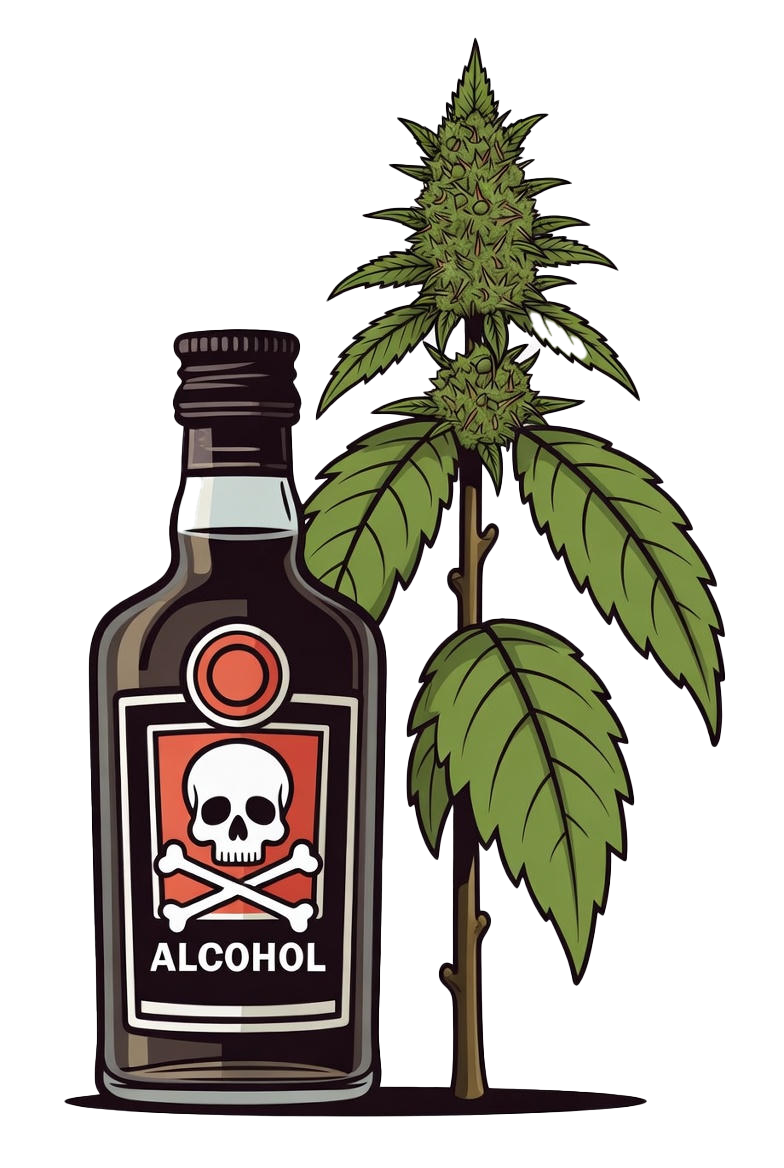
Cannabis (weed/marijuana) contains cannabinoids like THC, which act primarily on the endocannabinoid system (ECS)—especially CB1 receptors in the brain and CB2 receptors in immune/peripheral tissues. The ECS interacts with multiple hormone and stress systems, including regulation of the hypothalamic–pituitary–gonadal (HPG) axis, which is one reason cannabis can noticeably affect mood, sleep, anxiety, motivation, and sexual function in some people (1).
On the androgen/DHT side: the evidence for cannabis as a “true DHT blocker” isn’t as strong as finasteride, but there are signals it may interfere with androgen signaling. For example, an older study found THC and related cannabinoids inhibited DHT binding to the androgen receptor in rat prostate cytosol (an anti-androgen–type effect in vitro) (2). Human data on testosterone and fertility markers are mixed: some studies find little clinically significant change, while others and some reviews discuss potential associations with semen parameters depending on dose/pattern of use (3). In PFS/PSSD/PAS communities, cannabis is often treated as a potential trigger because it can shift CNS signaling and (at least plausibly) intersects with hormone pathways; there are anecdotes of flares/crashes, especially with frequent/heavy use
Alcohol (ethanol) is a potent CNS-active drug that rapidly shifts neurochemistry—most notably by enhancing GABA-A signaling (the brain’s main inhibitory “calming” system) and reducing glutamate/NMDA signaling (a key excitatory pathway) (4). It can also impact sex hormones: evidence suggests low-to-moderate acute intake may raise testosterone, while large-volume acute intake can reduce testosterone, and chronic/heavy use is associated with lower testosterone, disruption of the HPG axis/testicular function, and in some cases higher estrogen activity (partly via altered metabolism/aromatization in the liver) (5).
In PFS/PSSD/PAS, alcohol is often discussed as a potential destabilizer because these conditions are frequently associated (anecdotally) with altered GABA/neurosteroid sensitivity and unpredictable nervous-system responses. Since alcohol strongly “pushes” GABA-A signaling and then can cause rebound excitation as it wears off (worse sleep, anxiety, agitation), sensitized individuals sometimes report flares/crashes or feeling “off” rather than a normal buzz (6). Alcohol can meaningfully shift GABAergic tone and hormone balance, so if it reliably worsens symptoms, treat it as a personal trigger and keep intake minimal or avoid it during stabilization.
(1) https://pmc.ncbi.nlm.nih.gov/articles/PMC5871916/
(2) https://pubmed.ncbi.nlm.nih.gov/6249575/
(3) https://pmc.ncbi.nlm.nih.gov/articles/PMC5660879/
(4) https://pmc.ncbi.nlm.nih.gov/articles/PMC165791/
(5) https://pubmed.ncbi.nlm.nih.gov/36880700/
(6) https://www.frontiersin.org/journals/neural-circuits/articles/10.3389/fncir.2023.1218737/full
Crash Anecdotes:
https://www.reddit.com/r/FinasterideSyndrome/comments/1j5p422/crashed_hard_after_alcohol/
https://www.reddit.com/r/PSSD/comments/uwwiop/does_alcohol_and_weed_cause_crash/
https://www.reddit.com/r/PSSD/comments/mv9e5f/anyone_here_experience_a_crash_from_weed/
My Personal Risk Ranking:
Moderate Risk of Permanent Worsening (for PFS/PSSD/PAS):
If you have PFS/PSSD/PAS, alcohol and weed are generally considered moderate to lower risk for permanent worsening, but reports of symptom flares and crashes are not uncommon.