Wellbutrin / Bupropion
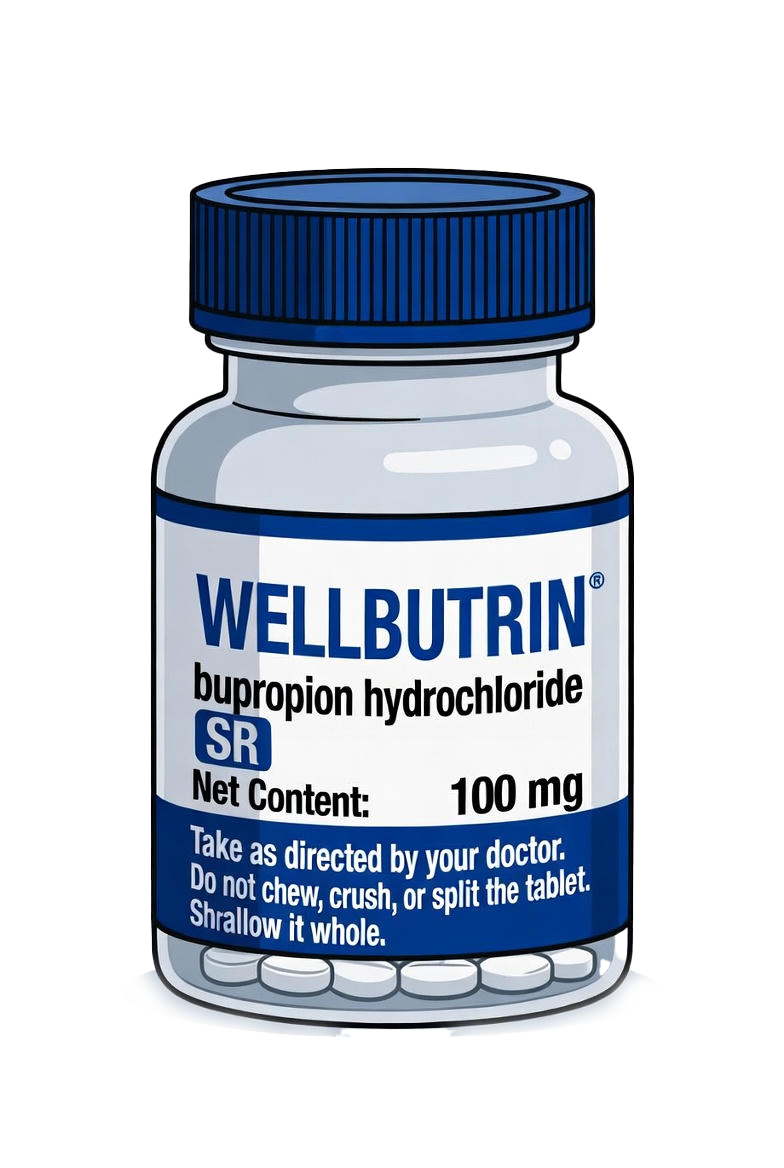
Wellbutrin (generic bupropion) is an antidepressant that works mainly by inhibiting norepinephrine and dopamine reuptake (NDRI) and also has nicotinic acetylcholine receptor–blocking activity; unlike SSRIs/SNRIs, it’s generally described as having minimal direct serotonergic activity (1). Clinically, it’s often considered one of the “safer” antidepressants for sexual side effects, with research and reviews consistently finding lower rates of treatment-emergent sexual dysfunction compared with SSRIs (1).
Even so, bupropion can strongly shift arousal/stress neurochemistry (dopamine/norepinephrine), and its labeling highlights activating side effects like anxiety/agitation, insomnia, irritability, plus risks like increased blood pressureand (dose-related) seizure risk in susceptible situations. (2). In PSSD/PFS communities, there are many anecdotal reports of people who don’t tolerate that activation well—describing symptom flares (“crashes”), worse anxiety/sleep, or worsened sexual symptoms—despite bupropion’s reputation for fewer sexual side effects.
(1) https://pmc.ncbi.nlm.nih.gov/articles/PMC514842/
(2) https://www.accessdata.fda.gov/drugsatfda_docs/label/2025/020358s070lbl.pdf
Crash Anecdotes:
https://www.reddit.com/r/PSSD/comments/jibhff/be_cautious_with_wellbutrinbupropion/
My Personal Risk Ranking:
High Risk of Permanent Worsening (for PFS/PSSD/PAS):
If you currently have PFS/PSSD/PAS, these substances may carry a high risk of worsening symptoms—potentially in a lasting way—and is best avoided.
Some people report that reinstating of Wellbutrin temporarily improves symptoms, but there are also many anecdotes of severe—sometimes long-lasting—worsening after reinstatement, so it’s widely viewed as a high-risk approach in these communities